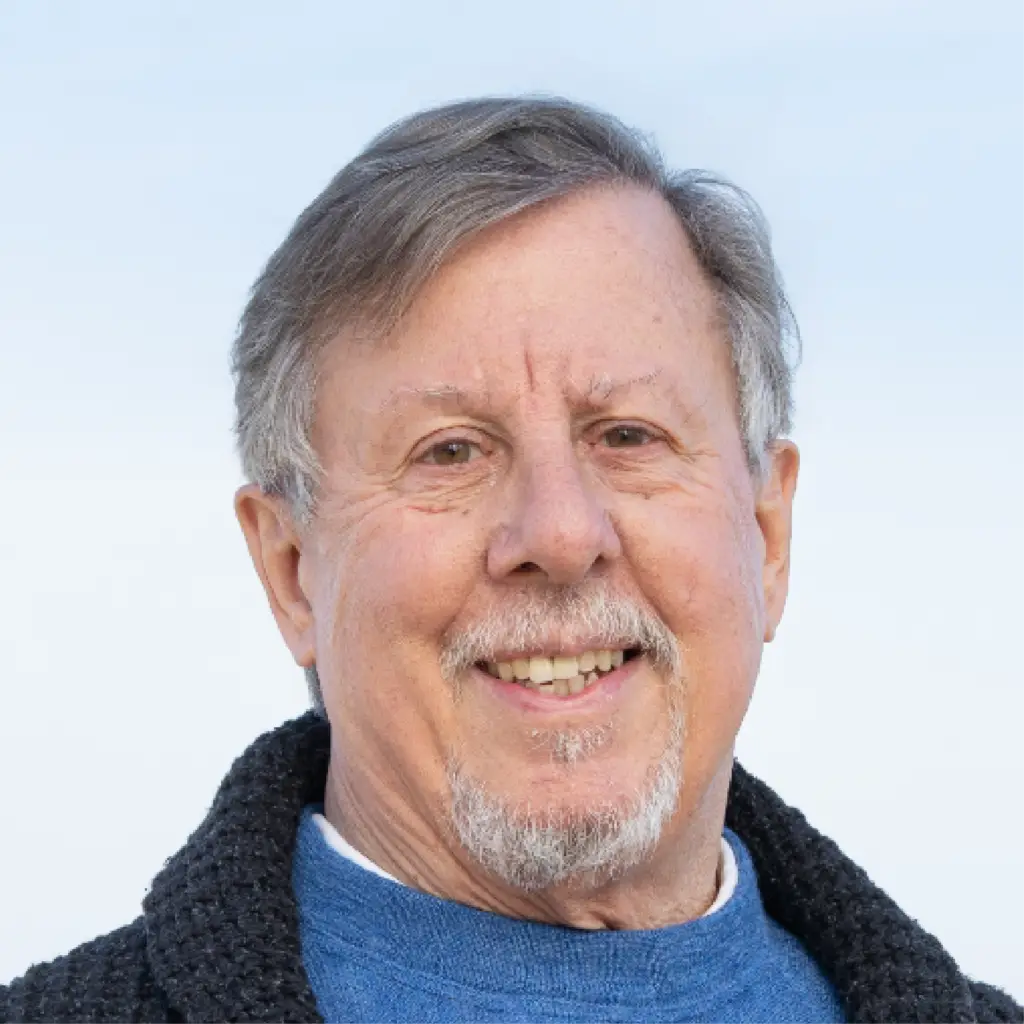
Richard C. Schwartz, Ph.D.

Richard C. Schwartz, PhD will teach during Wisdom & Wellbeing Week 11 | Multi-Faculty Trauma II | March 13-20, 2027 on the following topic:

Trauma and Releasing Personal & Legacy Burdens: The Internal Family Systems (IFS) Model

Trauma and Releasing Personal & Legacy Burdens: The Internal Family Systems (IFS) Model

Developed over the past four decades, the Internal Family Systems (IFS) model provides a comprehensive framework for understanding the human mind, healing trauma, and strengthening relationships. It serves as both a conceptual foundation that can integrate a wide range of therapeutic approaches and a practical model with original techniques for creating safety, restoring inner balance, and fostering Self-to-Self connection within individuals, couples, and families.
This presentation introduces the core principles of IFS and explores how trauma, including both personal and legacy burdens, shapes our internal system. Participants will gain an understanding of how healing occurs through increased access to Self and compassionate engagement with our protective and wounded parts.
The presentation also considers how today’s rapidly changing world can activate our internal systems. Examples include:
  • Political polarization and societal uncertainty
  • The rapid emergence of artificial intelligence and the concerns, hopes, and protective responses it evokes
  • Climate change and the anxiety, grief, and uncertainty it can generate
  • Economic instability and financial stress
  • Social media, constant connectivity, and information overload
Through the lens of IFS, these collective challenges can be understood as experiences that activate different parts of ourselves, offering opportunities for greater awareness, compassion, and healing.
For more information about Internal Family Systems, please visit https://ifs-institute.com

Keywords and Terms:
• Exile – a part that experienced trauma and is frozen in time. It may be young but does not necessarily need to be, though it is vulnerable and often feels tender or sensitive. It carries burdens and can be overwhelming in extreme states, leading to deep feelings of danger.
• Firefighter – these parts deal with the emergency of the Exile being triggered. They work to protect the Exile at all costs, often leading to dissociation or addiction in some form. The Firefighter is activated immediately after the Exile is triggered and works to mitigate the bad feelings.
• Critic – this part works to terminate the Firefighter activity and often imparts shame on the Exile for allowing the Firefighter to engage in a protective activity. This is especially true when the Firefighter has triggered others, or if the ‘escape’ is behavior that goes against social, spiritual, or familial norms. The Critic follows the Firefighter and works to mitigate the perceived harm from protective activities.
• Manager – both the Firefighter and the Critic are managers, working to protect and prevent additional fear, burden, and shame.
• Three-Part Cycle – the sequence that parts engage in as they go through the trauma and addiction scenario.

Key Points to Remember:

• The natural state of the mind is to have several parts.
• When parts work in harmony, the Self leads.
• The Self is beneath the surface of the parts and cannot be damaged or destroyed.
• The Self is in everyone and knows how to heal from trauma.
• Parts play roles that they do not necessarily want to play, and with integration, they can disengage from Manager jobs.
• It is important to have compassion and curiosity when dealing with all parts.
• When working with trauma, do not begin with Exiles. Ask permission from Managers and Firefighters to access those vulnerable, younger parts. In other words, “We go to these Protectors not expecting them to change until what they protect has been healed or changed.”
• Self is an active leader, and when integrated, it embodies the 8 C’s – Calm, Connection, Compassion, Creativity, Clarity, Curiosity, Confidence, and Courage

This workshop is not a substitute for therapy. Participants are responsible for ensuring they have adequate personal support in place while engaging in this experiential work.

Medical Disclaimer
The nature of the IFS learning process may stimulate psychological and emotional issues for participants. Participants are required to take responsibility for maintaining their own safety in participating in this program/workshop/course. This workshop as well as associated support from course facilitators are not a substitute for professional mental health care services, or medical care. They are also not intended for clinical diagnosis, or treatment, nor are the information or activities intended to replace consultation with a qualified healthcare provider.
In addition, participation in demonstrations is voluntary and for educational and training purposes only, and does not constitute therapy or create a therapeutic relationship with facilitators. Participants understand that demonstrations may involve emotional discomfort, assume any associated risks, and may withdraw at any time without penalty. By participating, you agree not to rely on this experience for therapeutic benefit and release facilitators from any claims arising from participation.
Should you experience a mental health, or other emergency. If you are in crisis now or anytime, please contact your local emergency services (for example, 911) or go to the nearest emergency room.

INTENSIVE

Richard will also be leading an intensive during Week 12 | March 20-27, 2027on the following topic:

Deep Healing of the Exiles

At the heart of Internal Family Systems, lies the recognition that the mind is naturally composed of multiple parts, each with its own feelings, beliefs, and roles. Among these parts, exiles hold the deepest wounds: the young, vulnerable aspects of the self that became overwhelmed by painful experiences — often in childhood — and were sequestered away by the system to keep the rest of us functional. Carrying burdens like shame, worthlessness, fear, and grief, exiles remain frozen in the past, driving much of our suffering from the inside out.

This workshop with Dick Schwartz focuses on the advanced, sacred work of healing these exiles directly. Rather than managing symptoms or working only with the protective parts that guard the system, participants will learn how to safely move through the full unburdening sequence. Gaining protector permission, making compassionate contact with exiles, witnessing their pain without judgment, offering corrective experiences, retrieving them from the past, and guiding them through the release of their burdens.

Drawing on decades of experience and live demonstration, Dick will illuminate what makes exile work uniquely transformative: when an exile is truly seen, heard, and healed by the Self — the calm, compassionate core that is innate in every person — it no longer needs to be protected. Protector parts can relax their extreme roles, the whole internal system shifts, and clients access a quality of freedom and wholeness that reaches far beyond symptom relief.

Whether you are a clinician deepening your IFS practice or a trained practitioner ready to work more confidently with complex trauma, this workshop offers both the conceptual grounding and lived felt sense of what it means to go all the way in and bring someone home.


This workshop is not a substitute for therapy. Participants are responsible for ensuring they have adequate personal support in place while engaging in this experiential work.

Medical Disclaimer
The nature of the IFS learning process may stimulate psychological and emotional issues for participants. Participants are required to take responsibility for maintaining their own safety in participating in this program/workshop/course. This workshop as well as associated support from course facilitators are not a substitute for professional mental health care services, or medical care. They are also not intended for clinical diagnosis, or treatment, nor are the information or activities intended to replace consultation with a qualified healthcare provider.
In addition, participation in demonstrations is voluntary and for educational and training purposes only, and does not constitute therapy or create a therapeutic relationship with facilitators. Participants understand that demonstrations may involve emotional discomfort, assume any associated risks, and may withdraw at any time without penalty. By participating, you agree not to rely on this experience for therapeutic benefit and release facilitators from any claims arising from participation.
Should you experience a mental health, or other emergency. If you are in crisis now or anytime, please contact your local emergency services (for example, 911) or go to the nearest emergency room.

Richard C. Schwartz, PhD, began his career as a family therapist and an academic at the University of Illinois at Chicago. There he discovered that family therapy alone did not achieve full symptom relief and in asking patients why, he learned that they were plagued by what they called “parts.” These patients became his teachers as they described how their parts formed networks of inner relationship that resembled the families he had been working with. He also found that as they focused on and, thereby, separated from their parts, they would shift into a state characterized by qualities like curiosity, calm, confidence and compassion. He called this state the Self and was amazed to find it even in severely diagnosed and traumatized patients. From these explorations the Internal Family Systems model was born in the early 1980s. IFS now has a growing evidence base and has become a widely-used form of psychotherapy, particularly with trauma. It provides a non-pathologizing, optimistic, and empowering perspective and a practical and effective set of techniques for working with individuals, couples, families.

Richard is also the Founder of the IFS Institute that offers training for professionals. He is currently a Teaching Associate in Psychiatry, at Cambridge Health Alliance, a Harvard Medical School teaching affiliate. Richard has authored or co-authored more than ten books on Internal Family Systems and related topics, including No Bad Parts and Internal Family Systems Therapy. He lives near Chicago with his wife Jeanne, Vice President of the IFS Institute, close to his three daughters and his growing number of grandchildren.